
Heroes, Part 2: Courage
The stories we tell about fear, and the ones that are true

“You can only truly show courage when you’re scared.”
from a survivor’s account
Fear has always been part of being human. It’s there in the dark, in the forest, and in the moments when we face a choice we’d rather not make. Fear is unavoidable. It’s also what makes courage possible.
Courage is not the absence of fear. It is “yes” when your instincts are screaming “no.”
We like to imagine courage as something grand. A speech. A charge. A man on a horse. But history often turns on smaller acts, carried out by people who did not think of themselves as courageous at all.
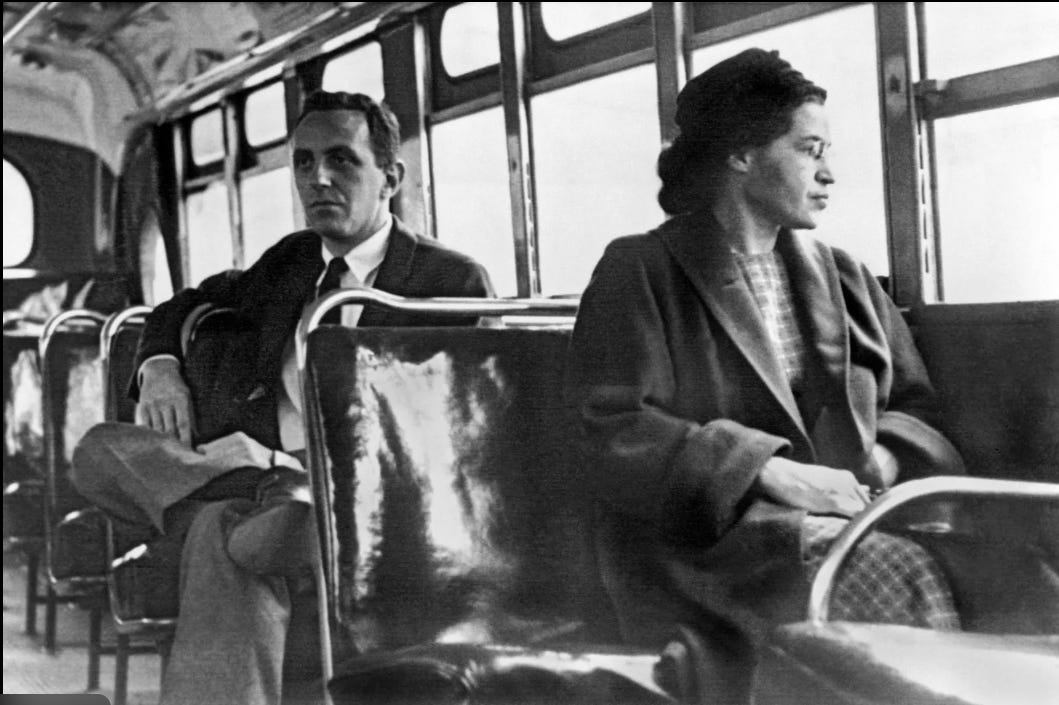
Courage was Rosa Parks, refusing to give up her seat. It was Desmond Doss, an unarmed medic staying behind under fire to carry the wounded out one by one. Witold Pilecki, choosing to walk into Auschwitz so the truth could walk back out.
Courage isn’t dramatic.
It’s doing the thing anyway.
Courage is also getting up on the days you can’t face the world.
But courage is only half the story. The other half is what we’re taught to expect when things fall apart.
Crises don’t just reveal individuals. They expose what we’ve been taught to believe about each other.
We’re told that when rules collapse, so does decency. That people panic. Loot. Turn feral. That civilisation is only a thin coat of paint, and underneath it all we’re savages waiting to break free.
We’ve been fed that story for decades.
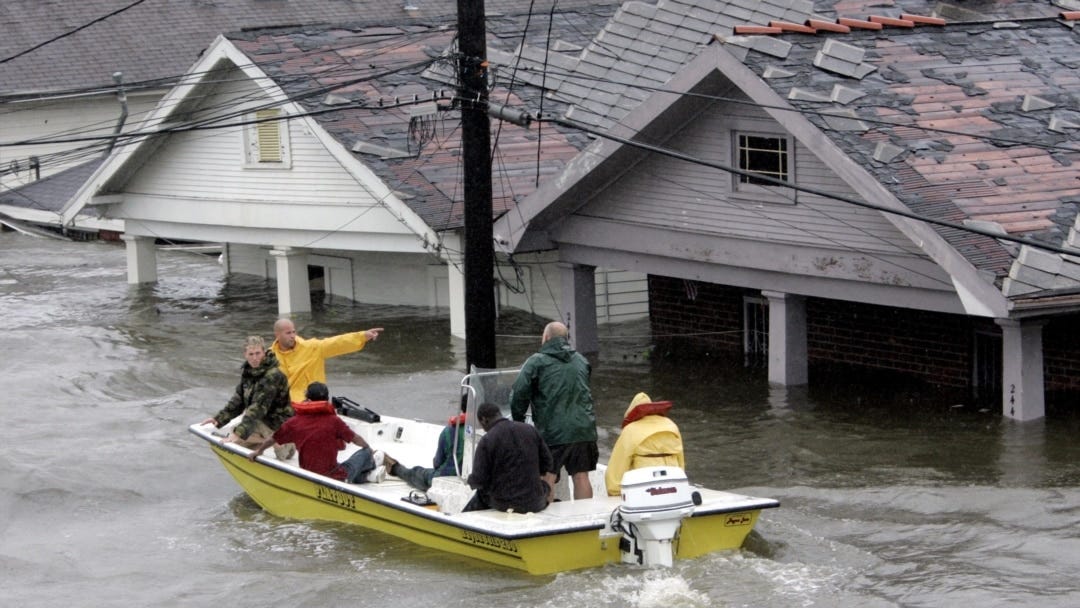
When Hurricane Katrina hit New Orleans, the cameras didn’t linger on neighbours rescuing neighbours. They zoomed in on poor Black communities and called it chaos. The message was clear. Remove authority and “the peasants revolt.”
That story justified the response. Armed patrols were sent into neighbourhoods instead of food and medical aid. Control arrived faster than care. The threat wasn’t disorder. It was people coping without permission.
We’re told this story over and over. That sooner or later the mob descends into violence because it’s our nature. That rules are the only thing standing between order and savagery.
It’s the same story told in Lord of the Flies by William Golding. A group of boys stranded on an island try civilisation for a while, then descend into murder. A fat kid named Piggy is hunted and killed by the other kids. Proof, we are told, that human nature is brutal once authority disappears.
It’s neat. It’s terrifying. And it’s mostly bullshit.
Real disasters don’t look like that.
Study after study shows the opposite. In earthquakes, floods, fires, and bombings, people overwhelmingly help each other. Strangers dig strangers out of rubble. Communities organise themselves before governments do. After the 2010 Haiti earthquake, people risked their lives to save others with their bare hands while the world watched.
What happens in emergencies isn’t savagery - It’s solidarity.
So why does the myth persist? Because it’s useful.
There’s a term for it. Elite panic. It isn’t fear of disaster. It’s fear of the public. The powerful panic at the thought that people might self-organise, notice incompetence, or realise they don’t need permission to care for each other.
We’ve seen this pattern again and again. During disasters and pandemics, mutual aid is treated with suspicion while power scrambles to reassert itself. The fear isn’t collapse. It’s independence.
So they warn of riots. Flood the streets with police. Justify surveillance, curfews, and control “for our own safety.” Not because it helps, but because it protects their position.
When control is prioritised over care, disasters become catastrophes.
This isn’t a misunderstanding of human nature.
It’s a deliberate misrepresentation of it.
Courage isn’t a speech. It isn’t authority. It isn’t standing behind a podium once the danger has passed.
Courage can be sudden, but it can also be chosen. It can be planned. Rehearsed. Carried quietly for a long time before it’s needed.
It belongs to people who knew the risk and showed up anyway. Who decided, in advance or in the moment, that doing nothing was no longer an option.
Heroes aren’t the ones who claim courage.
They’re the ones who did what had to be done.
And I’ll finish with a line that gives us advice on how to live couragously spoken this time by Doctor Who:
“Never be cruel. Never be cowardly.
Hate is always foolish. Love is always wise.
Always try to be nice. But never fail to be kind.”